
Everything is possible. Those three words are not just OHI's motto—they are the story of what one person, one organization, and one state can accomplish when they refuse to accept that the way things are is the way they have to be.
Where It Begins: Maine Before OHI
To understand OHI's history, you must understand what Maine looked like before we existed.
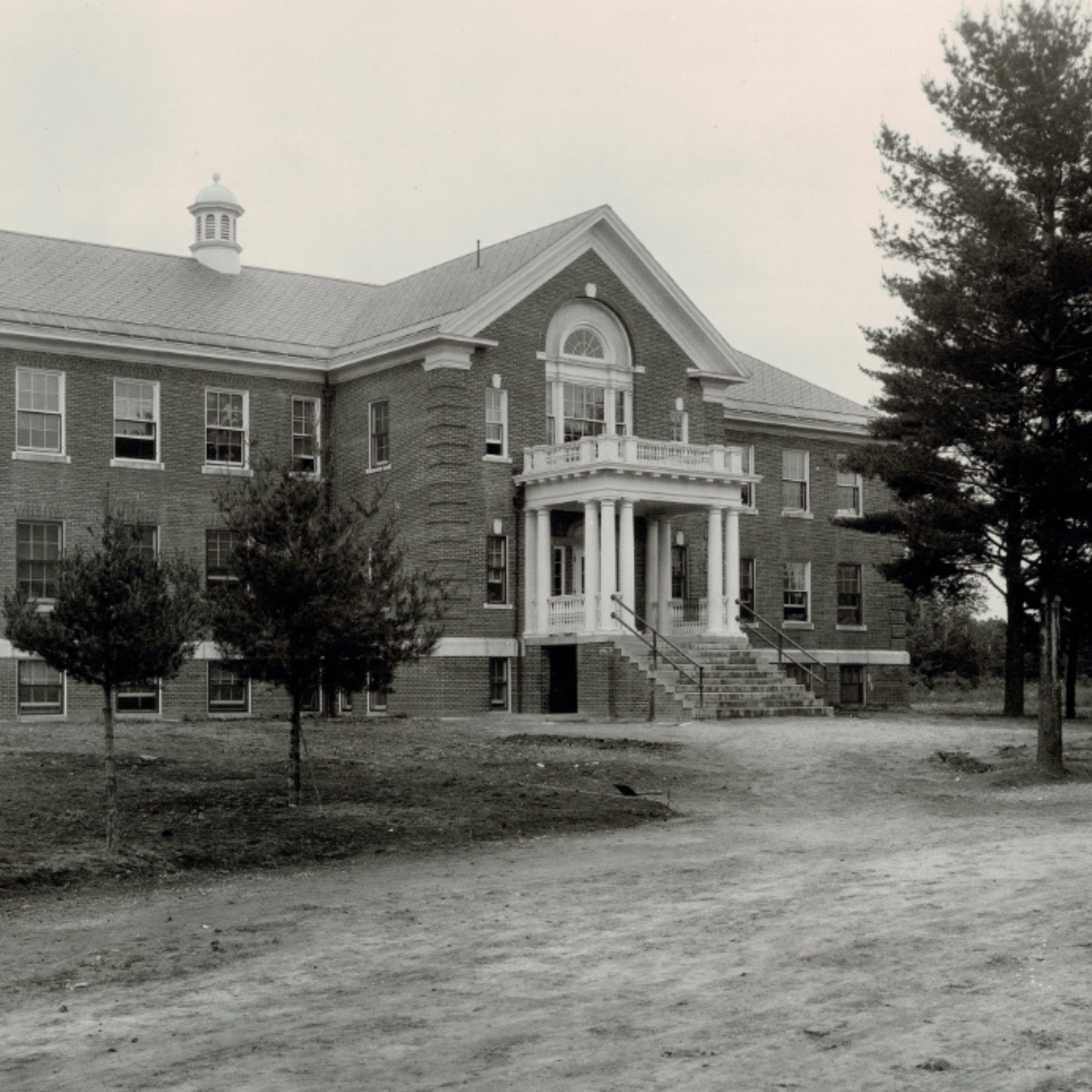
For most of the 20th century, adults with intellectual disabilities, autism, and mental illness in Maine had one destination: institutions. Pineland Center—Maine's principal institution for people with developmental disabilities—had been notorious for abuse, especially through the 1970s, including forced sterilizations, unnecessary drugging of patients, unsanitary conditions, and frequent use of straitjackets and restraint chairs. For showers, people were lined up and sprayed with a garden hose. Reform movements, often marked by a name change or a new building, failed repeatedly in their attempts to produce an institution free from abuse and neglect.
The Bangor Mental Health Institute told a similar story. People lived warehoused in psychiatric facilities—not because community living was impossible, but because no one had yet built the infrastructure to make it real.
That was about to change.
1979: A Founding Vision
OHI was founded in 1979, the same year Pine Tree Legal Assistance filed the landmark class action lawsuit against Pineland Center, alleging it did not provide adequate care, a suit that ultimately resulted in a consent decree creating care standards and setting a goal for a smaller institution. Maine was on the cusp of a historic reckoning, and OHI was born into that moment.
Bonnie-Jean Brooks' first Searsport High School essay had turned into a prophecy: "Do whatever I can to make life better for other less fortunate people in my beloved state of Maine," she wrote as a young rural Mainer in the 1950s. By 1979, she had taken the helm of OHI as President and CEO—a newly single parent of two young daughters, leading a brand new nonprofit at one of the most pivotal moments in Maine's disability history.
She didn't do it from a distance. When she accepted the leadership role at OHI, Brooks felt it was important to "meet people on their ground," so she moved into the Bangor Mental Health Institute to live alongside the people she'd soon be transitioning to group homes. Living there, she witnessed patients' trauma firsthand—people eating out of garbage cans, being hosed down after using the bathroom. "You can't develop trust with a person until you can understand their trauma history," she said.
That decision—to truly see and understand the people she was fighting for—would define OHI's culture for the next five decades.
1979–1996: Building Community From the Ground Up
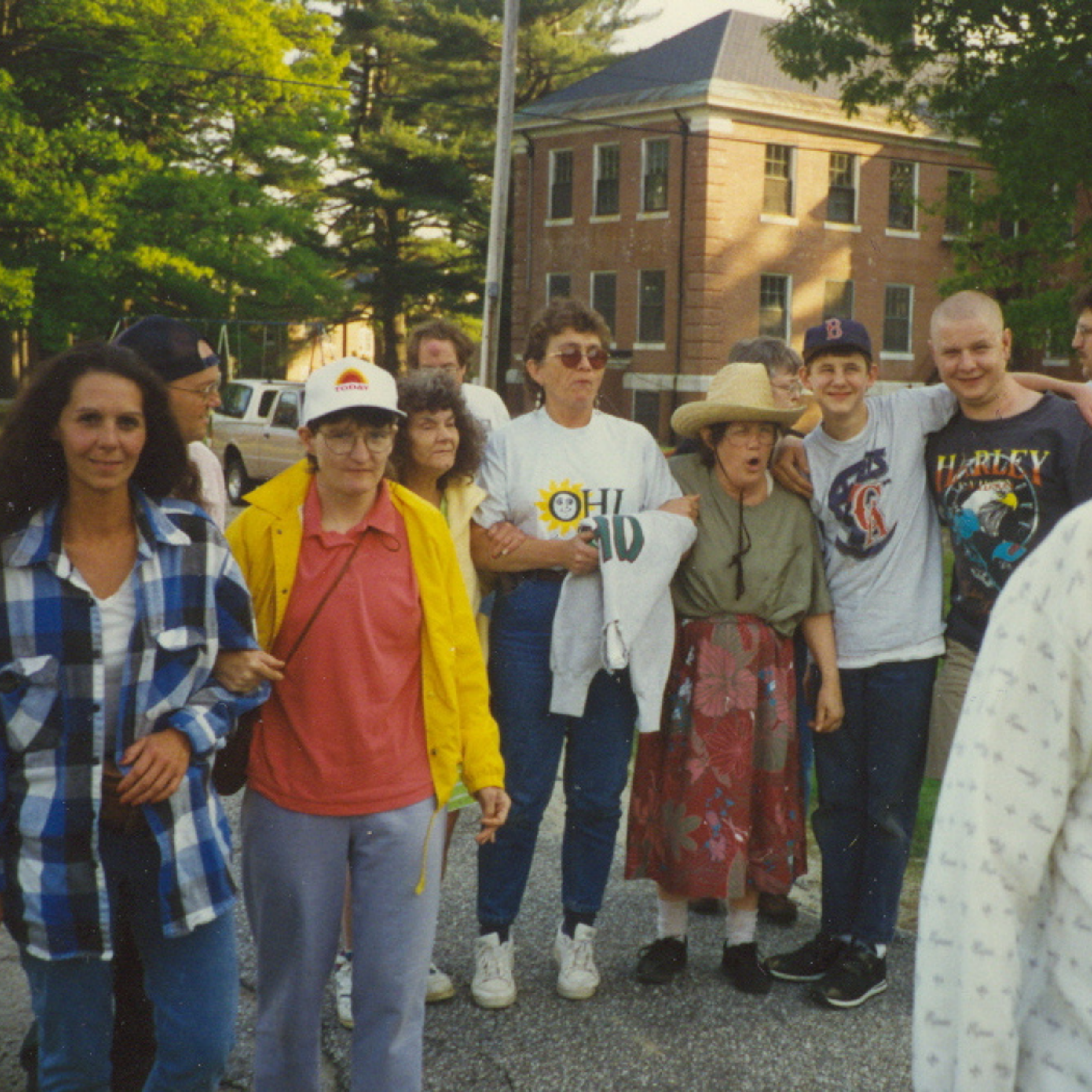
OHI was the first nonprofit in Maine to support twelve Class members who were institutionalized with the dual diagnoses of intellectual disabilities and mental illness, all residing in the Bangor Mental Health Institute or Pineland Center Institution. These were individuals the system had essentially given up on, people with complex, overlapping needs that no existing community provider had been willing or equipped to serve. OHI stepped forward.
The 1978 federal consent decree in Wuori v. Zitnay required that people with intellectual disabilities be moved from Pineland to small facilities integrated into Maine communities, and OHI was among the organizations that made that mandate a reality on the ground in central and eastern Maine. Group homes were opened. Community support programs were built. People who had spent years, sometimes decades, in institutions began—for the first time—to live in neighborhoods, make choices, build friendships, and participate in community life.
It was not easy. There was no roadmap. Under Brooks' leadership, OHI grew steadily in size and reputation, often taking over floundering programs from other agencies—stepping in where others stepped back. The philosophy was always the same: everything is possible.
The impact was real and profound. One woman whom Brooks first encountered, sedated and restrained in a psychiatric hospital later married, owned a home, and held a job in her community. When Pineland Center finally closed in April 1996, advocates and state officials considered it a major victory—and Maine emerged as a national leader in providing quality care for this population in community group homes rather than large institutions. On closing day, pigeons were released to symbolize freedom. OHI had helped build the system that made that day possible.
Building the Field: MACSP, ANCOR, and National Leadership
Bonnie-Jean Brooks didn't just build OHI—she built the field around it.
At the state level, Brooks founded the Maine Association for Community Service Providers (MACSP), where she remained a strong supporter of a range of key initiatives. MACSP became—and remains—Maine's leading advocacy association for IDD, autism, and brain injury service providers, shaping policy in Augusta and elevating the voices of providers and the people they serve. MACSP's most prestigious award for advocacy excellence—the Bonnie Jean Brooks Leading Light Award—bears her name.
On the national stage, Brooks was an active participant on ANCOR's Government Relations Committee and its various subcommittees, representing ANCOR before Congress multiple times. Leveraging her keen interest in taking a global perspective to support people with diverse needs, she was also an active member of ANCOR's Global Council. She served four terms at CARF, was appointed to multiple international accreditation committees, and served as a staff member to the President's Committee on People with Intellectual Disabilities.
From the classrooms of a rural Maine high school to the chambers of Congress, Brooks carried the torch of advocacy and social justice for all people with intellectual and developmental disabilities and mental illness. OHI's influence was no longer just local—it was national.
Growing into the Community: Services, Camp CaPella & the Brewer Area Food Pantry
Through the 1990s and 2000s, OHI continued to grow—not just in size, but in scope. Brooks grew OHI into an organization serving more than 600 people a year across six counties, operating 32 group homes and a range of rehabilitation and support programs.
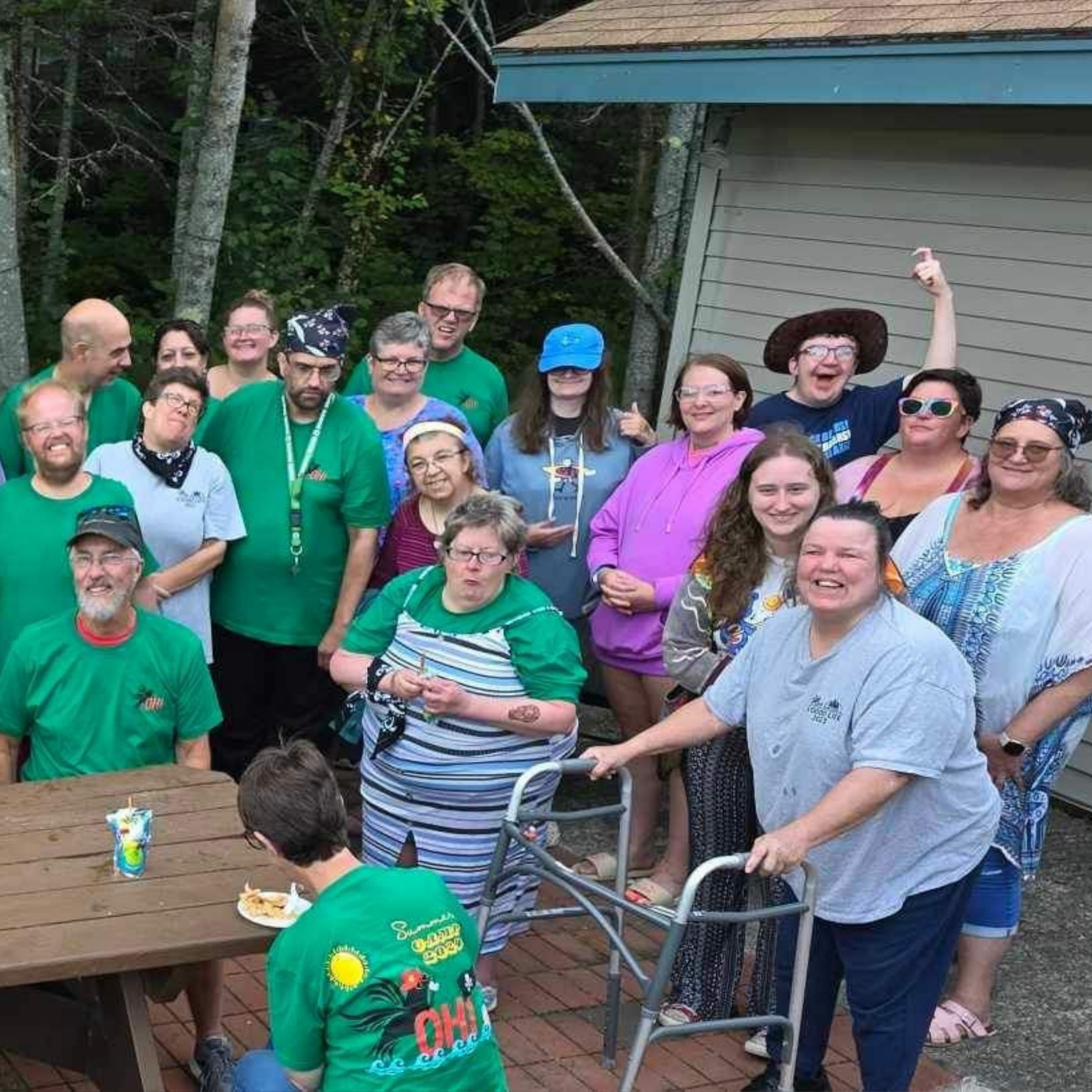
OHI's annual summer camp—held at Camp Capella on the shores of a Maine lake—became one of the most beloved events of the year. The six-day, five-night camp is attended annually by about 120 adults with disabilities.
In 2012, when the Brewer Christian Food Cupboard closed, leaving residents of Brewer and Eddington without a local food pantry, OHI acted—purchasing a building, forging community partnerships, and launching the Brewer Area Food Pantry. Today, it serves nearly 900 households, with 64% being seniors and children, and has received the Key to the City from the Mayor of Brewer in recognition of its community impact.
OHI's services expanded further into behavioral health—adding Community Case Management, Skills Development Services, Behavioral Health Home Services, Community Integration programs, and the LEAD ON! Community Support Program, building one of the most comprehensive continuums of disability and mental health services in northern and eastern Maine.
2022 and Beyond: A New Chapter, the Same Mission
In January 2022, after nearly 43 years leading OHI, Bonnie-Jean Brooks retired as President and CEO. Succeeding her was Melinda "Mindy" Ward, who began her career with OHI just 18 months after its founding in 1979, originally starting as a DSP and working through several management roles over more than four decades. The transition was a powerful symbol of OHI's promote-from-within culture—the same values, the same mission, carried forward by someone who had lived them from the very beginning. In 2026, John McNamara stepped into the CEO role at OHI, an outsider to the state and the industry, and took on the task of repositioning OHI as the leader in this space.
Today, OHI supports more than 350 adults with intellectual and developmental disabilities and mental illness across the communities of Bangor, Brewer, Hermon, Eddington, Orrington, Old Town, Orono, Hampden, Holden, Carmel, Levant, Dedham, Howland, Bucksport, Winterport, Ellsworth, and Lincoln—across six Maine counties, with more than 250 dedicated staff, a continuum of services that spans residential support, community case management, behavioral health, skills development, community integration, food access, and peer support.
The challenges ahead are real. The workforce crisis in disability services is growing. Medicaid funding pressures are intensifying. The systemic forces that once created institutions like Pineland have not disappeared—they have simply taken new forms. OHI knows this. And OHI will not stop fighting.
The Thread That Runs Through Everything
Fifty years ago, a young woman from Stockton Springs wrote a high school essay about improving the lives of the people of Maine. She meant it. She built an organization around it. She spent four decades proving it—one person, one group home, one community at a time.
The people OHI supports today live in their own homes, in their own communities, with their own choices and their own futures. Some of them, or their parents, were once told that wasn't possible.
Everything is possible. It always has been. And OHI will spend the next 50 years proving it again.